

Most of us did not grow up thinking we would one day feel owned by our jobs. But somewhere between the back-to-back meetings, the late-night emails, and the weekends that never really feel like weekends, work-life balance stopped being a goal and started feeling like a joke.
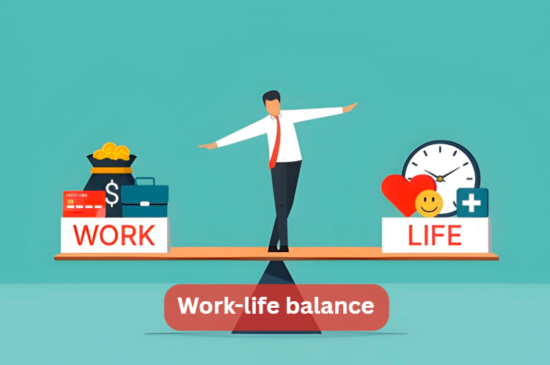
If you are working in the US right now, you probably feel this more than people in most other countries. America ranks 55th out of 60 nations for work-life balance.That is not a noteworthy statistic. And 51% of American workers say they feel completely drained by the time their workday ends. Not tired. Drained.
This essay won’t advise you to wake up at five in the morning or meditate more. It is going to walk you through six steps that actually move the needle on work-life balance,created for people with real jobs and real lives.
Why Work-Life Balance Is So Hard to Get Right in America

This is something that no one talks aloud enough. American work culture has a problem with rest. Staying late is seen as loyalty. Taking your full lunch break feels almost rebellious. Using all your vacation days can make you look like you do not care enough.
That is a broken way to operate. And most people feel it in their bodies before they can name it. The headaches that show up on Sunday evenings. The way your shoulders tense the moment your phone buzzes.
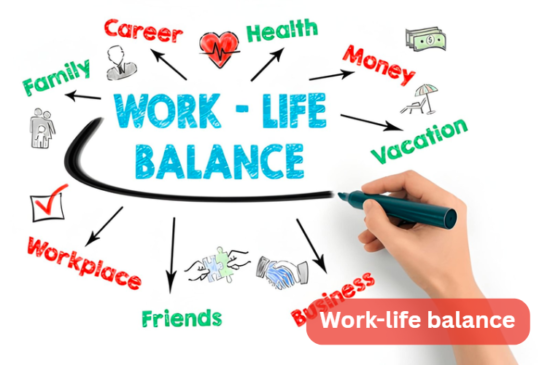
Work-life balance does not fix itself. It gets built, step by step, through decisions you make on purpose. Here is where to start.
Step 1: Pick a Stop Time and Actually Stop for Work-Life Balance
This sounds too simple to matter. It is not.Most people end their workday whenever everything feels done. But everything never feels done. There will always be one more email, one more thing to check, one more task sitting at the edge of your screen asking for five more minutes.
Pick a time. 5:30 PM. 6 PM. Whatever fits your situation. And when that time hits, stop. Not almost stop.Stop, really. Shut down the laptop. Turn off the work alerts. Move away from the desk.
It will be uncomfortable during the first few days. You will reflect on the emails you failed to respond to. In fact, that soreness is a positive indication. It indicates that you are learning to maintain the border and that it is real.
The end of the day must be clearly communicated to your brain.
Without that signal, work bleeds into dinner, into evenings, into the back of your mind at 2 AM. One firm stop time, practiced consistently, does more for your work-life balance than almost anything else on this list.
Step 2: Stop Treating Every Task Like It Is on Fire — Prioritize for Better Work-Life Balance
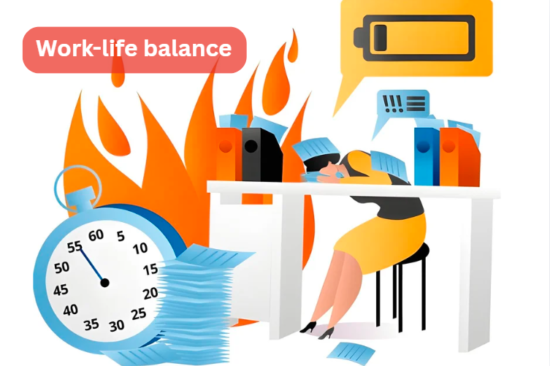
Not everything is urgent. But when you are stressed and behind, everything feels urgent, and that feeling makes it nearly impossible to focus on what actually matters.
Each morning, before you open your inbox, write down the three things that genuinely need to happen today. Not the full to-do list. Just three. Work on those first, before anything else pulls your attention.
When you separate what is truly important from what just feels loud, you get more done in less time. And when you get more done in less time, you protect your evenings instead of spending them catching up.
A full inbox does not mean a productive day. Three real things finished means a productive day.
Step 3: Book Your Personal Time Before Someone Else Books Over It

Here is what happens when you leave personal time unscheduled. It disappears. A colleague asks for a call. A deadline moves up. A project runs long. And suddenly the gym session you were planning, the dinner you wanted to cook, the hour you needed to decompress, all of it is gone.
Put your personal commitments in your calendar the same way you put work meetings there. If it is not blocked, it is available. So block it.
This matters even more for parents dealing with parenting challenges and co-parenting schedules. Your time with your kids, your recovery time, the thirty minutes that belong to you and nobody else these things deserve a spot on the calendar just as much as any conference call does. When you are running on empty, your family feels it too.
Step 4: Start the Morning as Yourself, Not as an Employee

The way most people start their morning sets them up to feel behind before the day even begins. Phone goes off. Emails get checked. The brain immediately shifts into work mode, and it never really shifts back out.
Try something different. Give yourself 20 or 30 minutes in the morning that have nothing to do with work. A walk. Some reading. Journaling. A slow cup of coffee with no screen in front of you. Parents who follow thoughtful child development practices and consistent discipline strategies already know that how a morning starts shapes how the whole day goes for their kids. The same is true for adults.
Work-life balance gets easier when you remind yourself, first thing in the morning, that you are a person before you are an employee.
Step 5: Get Comfortable Saying No
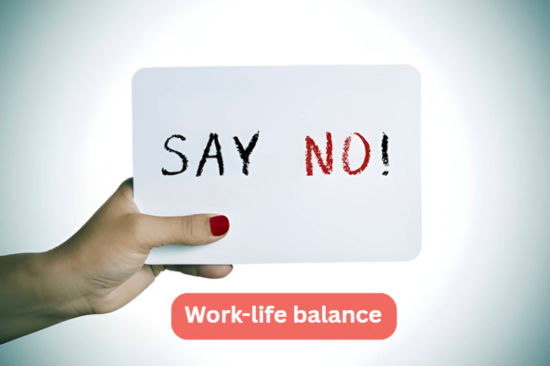
Overcommitment is quiet. It builds slowly. One extra project here. One favor there. A meeting you did not need to be in. Before long, your schedule belongs to everyone except you.
You are allowed to say no. You do not need a long explanation or an apology. “I have too much on my plate right now to take that on well” is a complete, professional answer. People who respect you will accept it. And if someone does not respect it, that tells you something useful about them.
Parenting resources often talk about boundaries in the context of raising kids. But the same principle applies to adults in the workplace. Knowing your limit and naming it is not weakness. It is how you stay effective over the long term.
Step 6: Check In With Yourself Once a Week
The balance between work and life changes. What is effective in January. A new project lands. A personal situation changes. Old habits creep back in.
Once a week, spend five minutes asking yourself honestly how things are goingNot how things are going at work. How are things going for you? Are you sleeping? Do you have time for things you enjoy? Are the boundaries holding or quietly eroding?
You do not need a formal review. Just five minutes of honest reflection.If something is slipping, you are able to address it before a catastrophe arises. If things are going well, you get to notice that too instead of always rushing to the next thing.
Final Thought
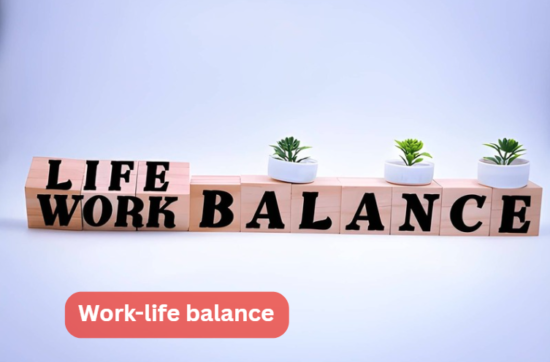
Nobody lies on their deathbed thinking about the emails they did not send.
Reducing your workload or losing interest in your career is not the goal of Work-life balance .
It is about not letting work quietly take over the parts of your life that actually make life worth living. Your health. Your people. Your sense of who you are when nobody is measuring your output.
Start with one step this week. Hold it. Then build from there. That is all it takes. Read more about parenting at https://momlifefamousparenting.com/