

Most of us have no intention of looking at a screen for seven hours every day. It simply occurred. A quick scroll here, a short video there, and before you know it, half the evening is gone.This is a regular issue for millions of Americans. It’s everyday life.
Screen time management has become one of the most talked-about challenges in homes across the United States. Adults in the US now spend over seven hours a day on screens, and children aged 8 to 18 average about seven and a half hours of daily screen use outside of school. That number is not just a statistic. It is time pulled away from sleep, movement, conversation, and real connection.

You may regain control over your digital habits by following these five easy, doable actions.. Whether you are a parent trying to set healthy limits, a professional struggling to unplug after work, or someone who just wants to feel less drained at the end of the day, these steps are built for you.
Why Screen Time Management Matters More Than People Realize
This is not about demonizing technology. Screens are tools.The screen itself is not the issue. It is the habit and the volume surrounding it.
Research from the National Institutes of Health found that when adults cut recreational screen use significantly, they reported better mood and mental well-being compared to those who made no changes. The effects of poor screen time management go beyond mood. Sleep suffers. Physical activity drops. Attention spans shrink. And relationships take a quiet hit, often one people do not notice until they look up and realize no one is talking to them at the dinner table.
A 2025 survey by Lurie Children’s Hospital found that more than half of US parents feel their child is addicted to screens, and 60 percent of those same parents feel guilty about it.Without a plan, guilt makes no difference.That is exactly why a structured approach to optimizing your screen habits makes a real difference.
Step 1 of Screen Time Management: Know What You Are Actually Doing
What you haven’t measured, you can’t fix. The majority of individuals underestimate how much time they spend on screens.They think about the obvious parts but forget the ten minutes checking email at breakfast, the thirty minutes of scrolling after lunch, and the hour spent on videos they never intended to watch.
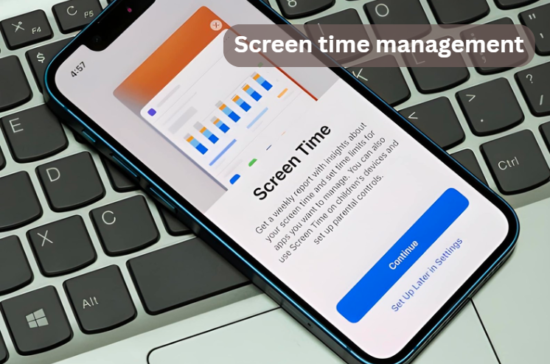
The first step in screen time management is an honest audit.Screen Time is available in Settings for iPhone users. Digital wellbeing is a feature of Android users. Both provide a daily summary of the apps you use and the amount of time you spend using them.
Look at the numbers without judgment. Then ask yourself which apps are actually serving you and which ones are just eating your time. Social media, short-form video, and news apps tend to be the biggest culprits. They are designed to keep you engaged far longer than you intend. One honest week of data can change the whole conversation in a household.
Step 2: Set Boundaries That Are Specific, Not Vague
“I should use my phone less” is not a plan. It is a wish. Vague intentions rarely survive contact with real life, especially when notifications keep pulling you back.
Good screen time management requires specific rules. The dinner table is the easiest place to start. No phones during meals. This one rule, applied consistently, opens up real conversation and restores a sense of connection many families have quietly lost. According to NIH guidance, putting devices away during mealtimes is one of the most research-backed strategies for improving family wellbeing.
Bedrooms are another important zone. Blue light from phones tells your brain it is still daytime, suppressing melatonin and making sleep harder. A simple rule is no screens for 30 minutes before bed. For working professionals, setting a firm end time for work notifications protects both productivity and downtime.
Start small. One screen-free meal a day. One hour before bed without a phone. Build from there.
Step 3: Screen Time Management Starts With Replacing, Not Just Removing

One reason people fail at cutting screen time is that they try to create empty space without filling it. You turn off Netflix, stare at the wall, and pick the phone back up anyway.
You need to replace a habit, not just eliminate it. This is especially true for children. If you take away a device without offering something else, you are not managing screen time. You are just creating conflict.
What you replace it with matters less than most people think. A short walk, a board game, cooking together, or reading a physical book all count. This is where family bonding becomes genuinely powerful. Research from Mayo Clinic found that when parents set down their devices, children experience a real improvement in emotional connection. Kids feel heard. They feel less like they are competing for attention with a screen.
Step 4: Use Digital Boundaries and Tools Without Relying on Them Completely

Technology can help you manage technology, but tools only go so far. Parental controls can be helpful, but determined kids often find workarounds. Open communication combined with parental guidance tends to be more effective than hard limits imposed through software alone.
That said, tools like Apple Screen Time, Google Family Link, and Qustodio are genuinely useful when used as part of a larger plan. The most important thing is explaining them to your kids. A child who understands why limits exist is more likely to internalize them over time.
Co-parenting across two households adds complexity. When screen time rules exist in one home but not the other, children get confused and play both environments against each other. Even a loose shared framework is better than none. For practical guidance on these conversations, parents have found real value through resources like famous.com/ where writers like chelsea acton famousparenting address the real challenges of raising digitally connected children. The focus on child development and honest mentorship aligns with what research consistently shows: relationships matter more than any app.
Step 5: Make digital discipline a Habit, Not a One-Time Fix

This is where most attempts fall apart. People try a digital detox for a weekend, feel great, and slide right back into old patterns by Tuesday.Establishing a balanced digital routine is not a reset button. It is an ongoing practice.
Consistency over time beats intensity for a week. A weekly check-in works well. Look at your screen time report on Sunday. See what happened. Adjust without drama. This is not about guilt or perfection. It is about staying aware.
For families, even a short monthly chat about screens keeps things honest without turning it into a big deal. When kids help decide the rules, they own them. That changes everything. And honestly,maintaining a tech balance is not some grand lifestyle overhaul. It is just paying attention. Noticing when you picked up the phone out of habit versus actually needing it.That awareness, even just a few seconds of it, starts to shift things over time.
Conclusion
Look, most people reading this already know they spend too much time on screens. That is not the problem. The problem is knowing it and still not doing anything about it.
You do not need a perfect system. You just need to start somewhere. Turn the phone over at dinner tonight. Charge it outside the bedroom this week. Notice how that feels. It will feel weird at first. Then it will not.
Screen time does not fix itself. But it does respond to small, steady pressure. And a few months from now, you will look back and realize your evenings feel different, your kids talk to you more, and you actually remember what you did last night. That is worth something real. Read more about parenting at https://momlifefamousparenting.com/