

Attachment parenting is not really a strict method. Most parents don’t wake up and decide to follow a checklist. It usually starts in a much simpler way. A parent picks up their crying baby. A child reaches out and gets comfort instead of being ignored. Over time, those small reactions start shaping the relationship.
In the United States, where life is often busy and structured around work and schedules, many parents feel a gap between what they want emotionally and what daily life allows. Attachment parenting comes in as a way to close that gap. Not through rules, but through connection.
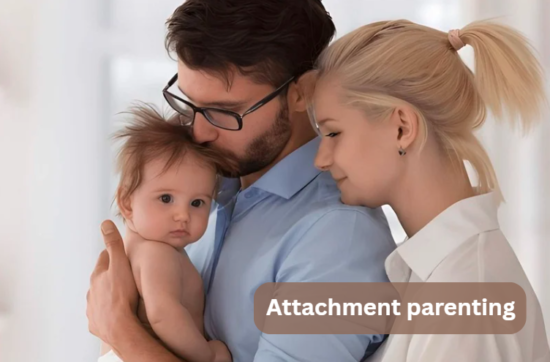
The idea has roots in the work of John Bowlby, who studied how early emotional bonds affect the way people relate to others later in life. Later, William Sears helped explain how those ideas could actually be used in everyday parenting without turning life upside down.
What makes Attachment bond interesting is that it does not rely on perfection. It relies on consistency in how a parent responds to a child. Not every moment has to be perfect. It just needs to be enough times where the child feels seen, heard, and safe.
And that changes everything.
1. A child starts feeling emotionally safe without even realizing it
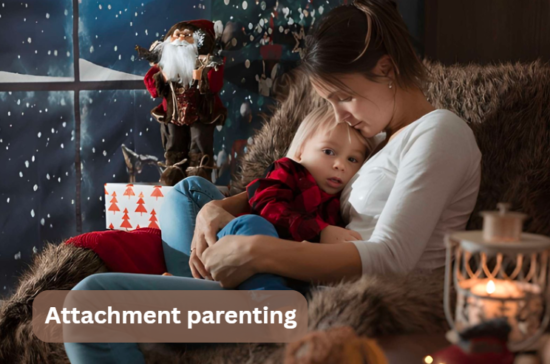
Co-parenting plays an important role here because when both caregivers respond in a steady and similar way, the child experiences emotional safety more consistently.
Children don’t understand emotional safety in words. They feel it. When a baby cries and someone comes, or when a child is upset and gets comfort instead of being dismissed, something quiet happens inside them. They stop feeling like their emotions are a problem.
Attachment parenting builds this slowly. It’s not dramatic. It’s repeated everyday responses that say “you’re okay here.”
In many American households, kids move between school, activities, screens, and social pressure. That kind of environment can feel loud even if no one notices it. Emotional safety becomes the thing that balances it out.
A child who feels safe emotionally does not need to constantly fight for attention or reassurance. They already expect it will come when needed.
2. Trust becomes something stable instead of uncertain
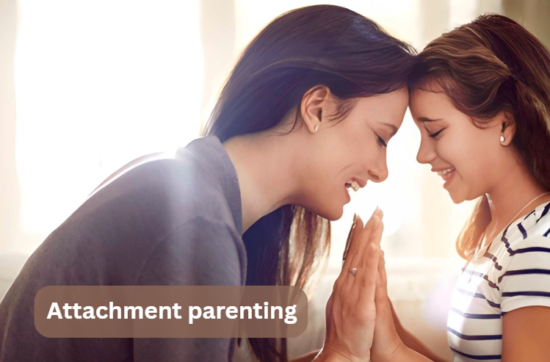
Gentle parenting connects closely here because it focuses on calm responses and respectful communication instead of punishment or harsh reactions.
Trust is not taught. It’s experienced. If a child cries and sometimes gets comfort and sometimes gets ignored, trust becomes shaky. But when the response is steady, something changes over time. The child stops questioning it.
Attachment parenting builds trust through repetition. Same kind of response, again and again. Not perfect timing, not perfect reactions, just steady presence.
Even small things matter more than people think. Answering a question properly. Not brushing off feelings. Staying near when a child is overwhelmed.
Eventually the child doesn’t feel like they have to “check” if the parent will show up emotionally. They already know.
That kind of trust is what shapes how they deal with relationships later in life too.
3. Communication becomes more honest and less forced
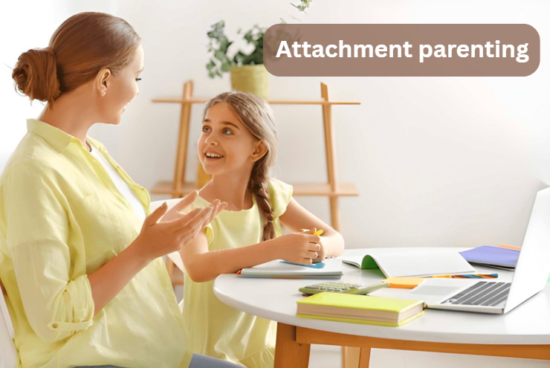
Child development research supports this idea because early brain growth is strongly shaped by how caregivers respond to a child’s signals and needs.
One thing that often gets overlooked is how early communication starts. Before words, there are signals. Crying, movement, silence, tone.
Building a secure attachment pays attention to those signals instead of rushing past them.
When a child realizes that their early signals actually get noticed, they don’t feel the need to escalate everything just to be heard. They start communicating more naturally.
In many families, especially in fast paced routines in the United States, conversations can turn into instructions or quick exchanges. That’s normal, but it leaves little room for emotional communication.
An attachment-based focus shifts that slightly. It brings back listening as the main action, not just speaking.
Over time, children raised this way usually don’t shut down emotionally. They talk, even when things are uncomfortable.
4. Physical closeness quietly shapes emotional calm
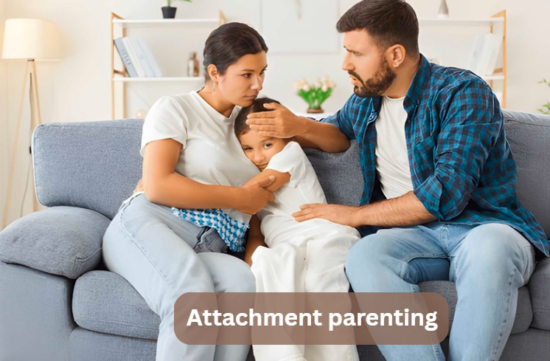
There’s something very basic about touch that people underestimate.Holding a baby, sitting close to a child, or just being physically present during distress does something that words sometimes can’t.
Attachment-focused care naturally includes more physical closeness in early years. Not in an extreme way, just in a responsive way.
A crying baby held close usually settles faster than one left alone. A child who gets comfort through touch learns that stress does not mean separation.
Even as children grow, this doesn’t disappear. It just changes form. A hand on the shoulder. Sitting together without distractions. A hug that doesn’t feel rushed.
These things slowly build emotional regulation without anyone explicitly teaching it.
5. Emotional development becomes more stable over time
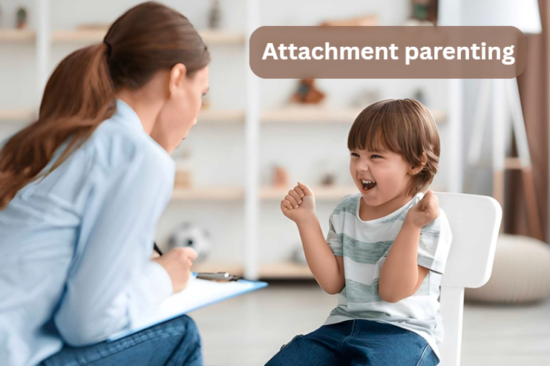
Parenting styles differ in how parents respond to a child’s needs, and this difference can strongly shape how a child learns emotional control and behavior over time.
A child’s brain is constantly learning how to react to the world.
If early experiences are unpredictable, the brain stays alert. If experiences are steady and supportive, the brain learns balance.
An Attachment-led approach provides that steadiness. Not by removing challenges, but by giving a consistent emotional response after challenges.
This helps children recover from stress more easily. It also helps them focus better and handle frustration without becoming overwhelmed.
You can often see this later in school settings. Children who feel emotionally secure tend to adapt better, not because life is easier for them, but because their emotional foundation is stronger.
6. Empathy grows naturally instead of being taught
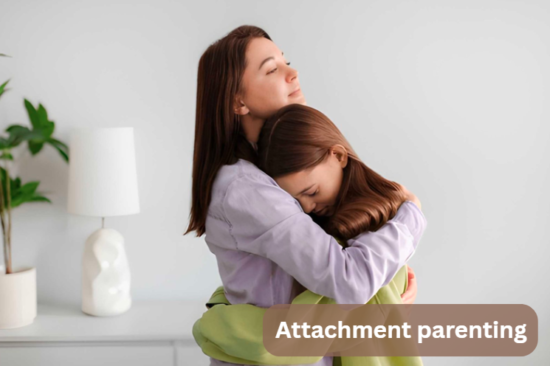
Most people think empathy is taught through lessons. In reality, it’s mostly absorbed.When a child is treated with patience and understanding, they start to reflect that behavior outward.
Prioritizing secure attachment creates many small moments where empathy is shown instead of explained. A parent calming frustration instead of reacting harshly. A parent naming emotions instead of ignoring them.
Children don’t just remember those moments. They copy them.
Later, this shows up in how they treat friends, siblings, and even strangers. They tend to notice feelings more easily because they grew up inside an environment where feelings were noticed.
7. Stress does not build up in the same way
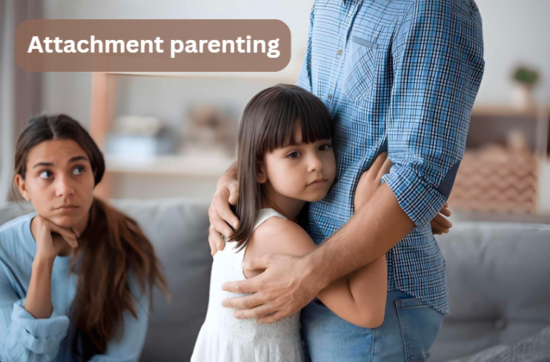
Stress in childhood is normal. But how it is handled makes a big difference.Practicing secure attachment doesn’t remove stress. It changes the recovery from it.
When a child knows they can come back to a safe person after a stressful moment, the stress does not stay stuck in their system.
Instead of building into long emotional reactions, it gets processed and released more quickly.
This can show up in everyday behavior. Fewer prolonged meltdowns. Faster calming down. Better ability to move on after frustration.
It is not about control. It is about emotional recovery.
8. Independence starts from security, not distance

I’ve seen this talked about a lot in parenting spaces, and honestly it makes sense when you look at real kids instead of theories.
A lot of people think independence means stepping away early or letting kids figure everything out on their own. But that’s not really how it works in real life.
Kids don’t become independent because they are pushed away. They become independent when they feel safe enough to move away on their own.
The Attachment focus builds that kind of safety first. So when a child tries something new, they are not doing it out of fear or pressure. They are doing it because they feel confident enough to try.
That’s why secure children often try new things more easily. They are not worried about losing connection while exploring.They know the connection is still there.
9. The small daily moments carry more weight than big ones
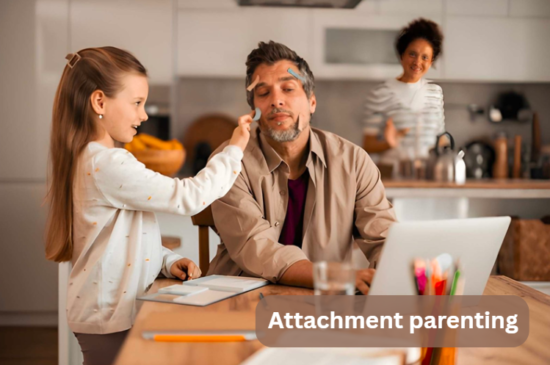
People like chelsea parenting often talk about something simple that parents usually notice only after years, not days. Most of parenting is not made up of big events. It is made up of ordinary moments.
Talking in the car. Sitting at dinner. Answering random questions. Listening after school. These are the parts that actually build the relationship, even if they don’t look important in the moment.
The Attachment style gives importance to these moments instead of ignoring them.
Over time, these small interactions build the actual relationship. Not one big moment, but thousands of small ones.
In busy family life, especially in the United States, these moments can easily disappear. But even a few minutes of real attention can change the emotional tone of the day.
10. The bond does not end when childhood ends
One of the most overlooked parts of Attachment-based parenting is how long its effects last.
Children who grow up with emotional security often stay connected to their parents in adulthood. Not out of obligation, but out of comfort.
They communicate more openly. They handle conflict with more patience. They maintain relationships even when life gets busy.
That long term bond is not built suddenly.It is gradually developed over years of constant emotional presence.
And even when life changes, that foundation usually stays.
Conclusion
Attachment parenting is not a technique. It is a pattern of presence.It is built in small responses, repeated often enough that a child starts to feel safe without needing to think about it.
The 10 methods mentioned above all refer to the same concept in various ways. Emotional safety, trust, communication, empathy, independence, and long term connection all grow from how a parent shows up in daily life.
In the end, children don’t need perfect parenting. They need consistent emotional connection. Read more about parenting at https://momlifefamousparenting.com/