

Being strict all the time is not what discipline is all about. It’s about carrying out the important tasks even when you don’t feel like it. A lot of individuals rely on inspiration, but it wanes fast. Discipline endures. Because of this, those who develop strong habits frequently see improved outcomes over time.
Good discipline strategies help you stay focused, manage your time, and follow through on your goals.Higher self-control is associated with improved performance in daily life, relationships, and the workplace, according to research. They are not flawless as a result. It indicates that they adhere to straightforward procedures that keep them going.
In this post, you will learn 11 practical discipline strategies that improve self control and consistency. These are not complicated ideas. They are simple actions you can apply in real life. Some will assist you with time management. When distractions arise, others will assist you in maintaining your concentration.
This guide is created for everyday life in the United States, where busy schedules and constant distractions make discipline harder. You will also see how these ideas connect with parenting, habits, and emotional awareness.
What Helps You Stay on Track Daily
People often think being disciplined means doing some huge, heroic effort every day. Truth is, it’s usually just the little stuff showing up on time, actually finishing what you started, not letting tasks pile up. Honestly, that’s what real discipline strategies are all about tiny choices that keep your day from falling apart.
When your day has some structure, things feel less messy.It becomes simpler to continue moving without overanalyzing as you spend less time considering what to do next.
It also helps to notice what usually pulls you off track. For some people it is the phone, for others it is just switching between too many tasks. Once you see the pattern, it becomes easier to adjust your routine in a simple way.
The idea here is not perfection. It is just keeping your day steady enough so you do not feel out of control all the time.
1. Set Clear and Simple Goals
The first step in using discipline strategies is knowing what you want. Vague goals create confusion. Clear goals create direction.
Instead of saying you want to be productive, define what that means. For example, finishing one task before noon is clear.Drafting for one hour is clear.
Studies show that specific goals improve focus and follow through because they remove guesswork.
Keep your goals small at the start. Big goals often lead to burnout. Small goals build confidence.
This idea also connects with Positive parenting, where clear expectations help children behave better. Adults are not different. Clear rules work better than vague intentions.
Recording three activities a day is an easy method to put this into practice. Not ten. Not twenty. Just three.
That is how discipline starts. With clarity.
2. Build a Daily Routine That Stays the Same
.One of the best ways to make discipline easier is using routines. Doing the same important things at the same time each day helps make those actions automatic. Decision-making gets easier because you’re not constantly weighing what to do next, and stress drops since there are fewer decisions to make. Over time, these repeated actions turn into habits. These tiny choices are the essence of effective discipline strategies.
Routines, according to experts, lessen decision fatigue and facilitate the maintenance of discipline.
For example, if you always study at 7 pm, your brain begins to expect it. Over time, it feels normal.
This is also important in Child development, where consistent routines help children feel stable and focused.
Start with one routine. Maybe a morning routine or a work block. Doing something every day beats doing it perfectly once a week.
3. Focus on Your “Why”
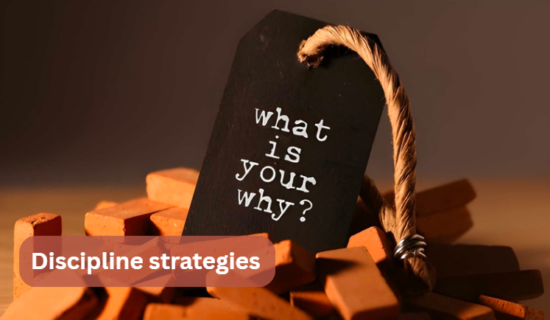
When your goal is important to you, discipline is simpler.It is simple to give up without a good reason.But when your goal connects to something personal, you keep going even when it feels hard.
Write down why your goal matters. Keep it visible. People who exercise for health or family tend to stay consistent longer than those who do it just for appearance.
In Parenting styles, parents who explain reasons instead of just giving orders often raise more responsible children. The same idea applies to self discipline.You need a reason that feels real to you.
4. Start Small and Build Slowly
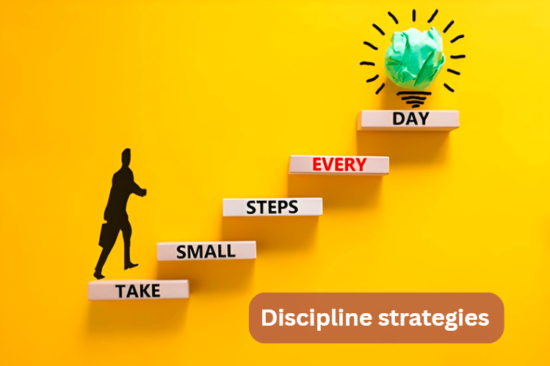
Many people fail because they attempt to make all the changes at once.Small steps are the focus of strong discipline-building habits. Daily repetition of small actions develops into habits.
For example, start with 10 minutes of focused work instead of trying to work for two hours straight. Once that feels easy, increase it.
This approach works because it lowers resistance.Small things are not difficult for your brain to handle.
Think of discipline like a muscle. It grows with repeated use, not sudden effort.
5. Remove Distractions Around You

Your surroundings are more important than your willpower.
If distractions are always around you, discipline becomes harder. For this reason, altering your environment is one of the most effective means of discipline.
Turn off notifications. Keep your phone away during work. Create a clean workspace.
Experts suggest that reducing distractions improves focus and productivity significantly .
This also connects with Emotional intelligence. When you understand what triggers distraction, you can control your response better.
6. Use Time Blocking to Stay Focused
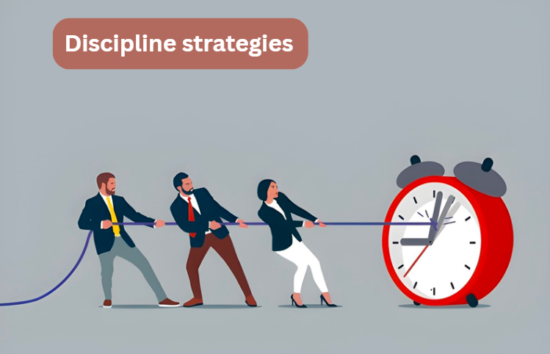
Assigning particular time slots to work is known as time blocking.You organize your day in blocks rather than at random. 9 to 10 for emails, for instance. For deep labor, 10 to 12.
This method improves focus because it creates structure. It also reduces procrastination.
Many professionals use this method because it keeps them on track during busy days .
Keep your blocks realistic. Leave space for breaks. That helps you stay consistent.
7. Practice Self Control in Small Moments

Self control grows through daily choices.You do not need big challenges. Small decisions matter more.
For example, choosing to start work on time. Choosing to avoid checking your phone. Choosing to finish what you started.Each small action strengthens your discipline.
In mom life parenting, daily routines and small habits often shape long term behavior more than big rules.
This is how discipline builds. One decision at a time.
8. Track Your Progress Daily
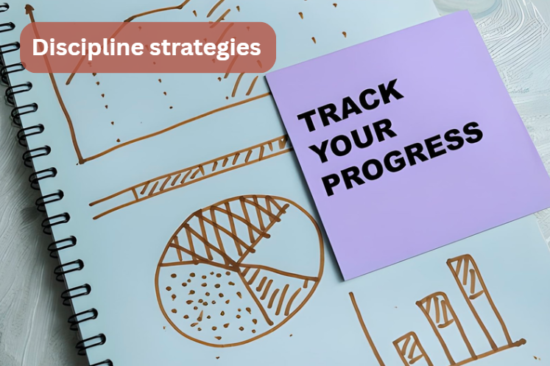
Tracking keeps you aware.You find patterns when you put your daily activities in record.You observe what works and what doesn’t.
Many experts recommend tracking habits because it increases accountability and motivation .
Use a notebook or a simple app. Mark what you completed.Seeing progress builds momentum. Even small progress matters.
This is one of the simplest discipline tools, but it works well.
9. Stay Accountable to Someone

It is easier to stay disciplined when someone else knows your goals.This could be a friend, mentor, or family member.
When you share your goals, you feel more responsible. That increases follow through.
This idea is often used in fpmomlife guideline from famousparenting, where accountability helps both parents and children stay consistent.
You do not need many people. One person is enough.
10. Reward Yourself the Right Way

Rewards help reinforce good behavior.But the reward should match the effort. It should not cancel your progress.
For instance, it’s beneficial to take a quick pause after finishing a task. But skipping work for a reward is not.
Experts explain that small rewards increase motivation and make habits easier to maintain .
One of the disciplinary techniques that maintains equilibrium is this one.
Discipline does not mean removing enjoyment. It means earning it.
11. Accept Imperfection and Keep Going
No one stays disciplined all the time.There will be days when you become distracted or forget to complete duties. That’s typical.
Getting back on track as soon as possible is crucial.
Expecting perfection is a common reason why people give up. However, discipline is about consistency rather than perfection.
According to research, long-term consistency is more important than quick spurts of effort.
Don’t miss the next day if you miss the first.
That simple rule helps you stay consistent long term.
Conclusion
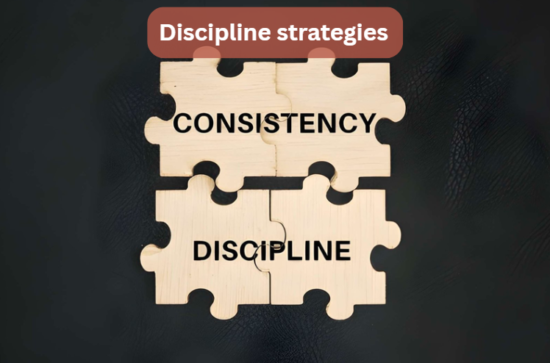
Discipline is not something you are born with. It is something you build.
These discipline strategies are simple, but they work when used consistently. Clear goals, daily routines, small actions, and reduced distractions all play a role.
Applying everything at once is not necessary. Start with just one or two tactics. Practice them every day. Then gradually add more.
Self control grows slowly, but it stays strong once built.
And in the long run, discipline gives you something motivation never can. Stability, consistency, and real progress. Read more about parenting at https://momlifefamousparenting.com/