
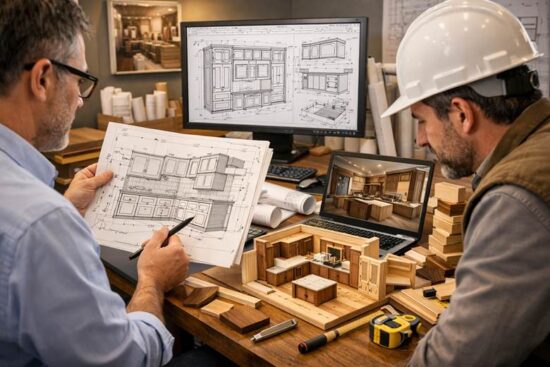
Modern architecture is no longer limited to structural elements alone. Today’s buildings feature highly customized interiors, luxury finishes, and intricate woodwork that require precise planning before construction begins. This is where Architectural Millwork Drafting Services play a critical role.
From high-end residential interiors to commercial spaces such as hotels, offices, and retail stores, millwork drafting ensures that every detail of cabinetry, wall panels, moldings, and custom furniture is accurately designed and documented for manufacturing and installation.
For architects, contractors, and construction professionals in the USA and UK, millwork drafting has become an essential part of the design-to-build workflow. This guide explains what Architectural Millwork Drafting Services are, how they work, and why they are increasingly important in modern construction projects.
What Are Architectural Millwork Drafting Services?
Architectural Millwork Drafting Services refer to the creation of detailed technical drawings and CAD models used to design, fabricate, and install custom woodwork in architectural projects.
These drawings translate architectural concepts into production-ready plans that millwork manufacturers, carpenters, and installers can follow accurately.
Millwork drafting typically includes:
- Shop drawings for cabinets, wardrobes, and shelving
- Detailed joinery and connection diagrams
- Material specifications and dimensions
- 2D CAD drawings and 3D visualization models
- Assembly and installation instructions
In simple terms, these drawings ensure that the vision of architectural millwork and design becomes a precise, buildable reality.
Why Are Architectural Millwork Drafting Services Important?
Architectural millwork involves customized elements that must fit perfectly within a building’s layout. Even minor measurement errors can cause expensive delays or material waste.
Professional drafting services help eliminate these risks.
Key Benefits for Architects and Contractors
1. Improved Design Accuracy
Millwork drafting converts conceptual ideas into measurable, detailed CAD drawings. This helps avoid misinterpretations during fabrication.
2. Faster Manufacturing
When millwork manufacturers receive precise shop drawings, production becomes more efficient. There is less need for revisions or clarification.
3. Reduced Construction Errors
Accurate drafting ensures millwork components fit perfectly with walls, ceilings, plumbing, and electrical layouts.
4. Better Collaboration
Contractors, architects, and manufacturers can all work from the same drawings, improving coordination across teams.
What Does the Architectural Millwork Drafting Process Include?
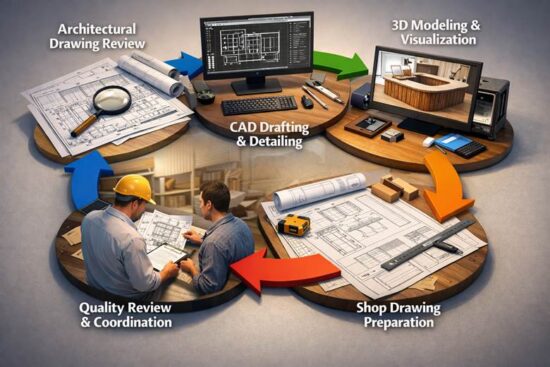
The process of creating professional Architectural Millwork Drafting Services usually follows a structured workflow.
1. Architectural Drawing Review
The drafting team analyzes architectural layouts, interior design concepts, and project specifications to understand millwork requirements.
2. CAD Drafting and Detailing
Using software such as AutoCAD or SolidWorks, designers create detailed drawings showing:
- Dimensions
- Material types
- Joinery techniques
- Hardware placements
3. 3D Modeling and Visualization
In many projects, 3D CAD models are developed to help architects and clients visualize the final design. This is especially useful in architectural woodworking and design projects involving complex decorative elements.
4. Shop Drawing Preparation
Shop drawings are finalized with full production details so manufacturers can fabricate millwork components accurately.
5. Quality Review and Coordination
Before submission, drawings are checked to ensure they align with architectural plans, structural elements, and MEP systems.
Where Are Architectural Millwork Drafting Services Used?
Millwork drafting is widely used across multiple construction and interior design sectors.
Residential Projects
Luxury homes and apartments often include customized millwork such as:
- Kitchen cabinetry
- Wardrobes and closets
- Staircase railings
- Decorative wall panels
Commercial Buildings
Corporate offices, hotels, and retail stores require millwork for both functionality and branding.
Examples include:
- Reception desks
- Display shelving
- Custom wall paneling
- Conference room cabinetry
Hospitality and Retail
The hospitality industry heavily relies on architectural millwork design to create unique interior experiences for customers.
According to the Statista global construction report, the worldwide construction market is expected to reach $15 trillion by 2030.
This rapid growth is increasing demand for specialized drafting services across architectural sectors.
What Are the Latest Trends in Architectural Millwork Design?
The CAD drafting and millwork industry has evolved significantly in recent years. Architects and contractors are adopting new technologies and design approaches.
1. Integration with BIM Technology
Many millwork drafting teams now integrate their drawings into Building Information Modeling (BIM) workflows.
According to a report from McKinsey & Company, digital technologies like BIM can improve productivity in construction by up to 15%.
This integration helps improve coordination between architectural, structural, and mechanical teams.
2. Sustainable Woodwork Design
Sustainability has become a major priority in modern architecture.
Architects are increasingly using:
- Reclaimed wood
- Engineered wood products
- Low-VOC finishes
- FSC-certified materials
These materials are carefully documented in architectural millwork and design drawings to ensure compliance with environmental standards.
3. Parametric and 3D Modeling
Advanced CAD tools now allow designers to create complex parametric millwork designs.
These designs are commonly used in:
- Luxury hospitality interiors
- High-end retail stores
- Feature walls and curved wooden structures
4. Digital Fabrication Integration
Millwork drafting is now closely linked with CNC machining and automated manufacturing.
Detailed CAD drawings can be directly used for:
- CNC cutting
- Laser engraving
- Automated wood fabrication
This improves precision while reducing manufacturing time.
What Challenges Do Architects Face Without Millwork Drafting?
Despite its importance, many projects still struggle with millwork documentation issues.
Common challenges include:
- Incomplete design details
- Poor coordination with other building systems
- Lack of standardization in drawings
- Time-consuming manual revisions
Without professional Architectural Millwork Drafting Services, contractors may face costly rework and installation delays.
How Can Outsourcing Millwork Drafting Help?
Many architecture and construction firms in the UK and USA are now outsourcing CAD drafting services to specialized teams.
This approach provides several advantages.
Key Benefits
- Access to experienced CAD professionals
- Faster project turnaround times
- Reduced operational costs
- Scalability for large projects
- Consistent drafting standards
Outsourcing also allows architects to focus on creative design while drafting experts handle technical documentation.
How to Choose the Right Architectural Millwork Drafting Partner?
Selecting the right drafting provider is essential for project success.
Architects and contractors should consider:
- Experience in architectural millwork design
- Knowledge of international drafting standards
- Proficiency in CAD and BIM tools
- Ability to deliver detailed shop drawings
- Strong quality control processes
A reliable partner ensures millwork drawings are accurate, practical, and ready for fabrication.
The Future of Architectural Millwork Drafting
The future of millwork drafting is closely tied to advancements in digital design technologies.
Some emerging developments include:
- AI-assisted CAD drafting
- Cloud-based design collaboration
- Digital twins in construction
- VR visualization for millwork interiors
These innovations are helping architects and contractors visualize complex designs and detect errors earlier in the design process.
As construction projects become more complex, demand for precise Architectural MillworkDrafting Services will continue to grow across global markets.
Final Thoughts
Architectural millwork plays a crucial role in shaping the aesthetic and functional aspects of modern buildings. However, without accurate technical documentation, even the most creative design concepts can fail during fabrication or installation.
Architectural Millwork Drafting Services bridge this gap by transforming design ideas into precise shop drawings and CAD models that manufacturers and contractors can follow with confidence.
For architects, contractors, and project developers in the UK, USA, and international markets, investing in high-quality millwork drafting is essential for delivering projects that combine design excellence with construction precision.
Many leading CAD specialists and design engineering firms now provide dedicated millwork drafting support to architectural teams worldwide. Partnering with an experienced provider such as a reputable UK-based CAD design company can help ensure that your architectural woodworking projects are executed accurately, efficiently, and on schedule.
FAQs
1. What are Architectural Millwork Drafting Services?
Architectural Millwork Drafting Services involve creating detailed CAD drawings and shop drawings for custom woodwork used in architectural projects. These drawings guide manufacturers and contractors in producing elements such as cabinets, wall panels, moldings, doors, and decorative wood structures with precise dimensions and materials.
2. Why are Architectural Millwork Drafting Services important for architects?
Architectural Millwork Drafting Services help architects convert design concepts into accurate production drawings. These drawings reduce construction errors, improve collaboration between designers and fabricators, and ensure millwork components fit perfectly within the building structure.
3. What is included in architectural millwork shop drawings?
Architectural millwork shop drawings typically include:
- Detailed dimensions and measurements
- Material and finish specifications
- Joinery and assembly details
- Hardware placement and mounting instructions
- Section views and installation guidelines
These drawings help manufacturers produce millwork components accurately.
4. What industries use architectural millwork drafting services?
Architectural millwork drafting is widely used in:
- Residential construction
- Commercial buildings
- Hotels and hospitality projects
- Retail store interiors
- Corporate offices
- Healthcare and educational facilities
These industries rely on precise architectural millwork and design for both aesthetics and functionality.
5. What software is commonly used for millwork drafting?
Professionals providing Architectural Millwork Drafting Services typically use advanced CAD and BIM software, including:
- AutoCAD
- SolidWorks
- SketchUp
- Revit
- Cabinet Vision
These tools help create accurate 2D drawings and 3D models for architectural woodworking and design projects.
6. How do Architectural Millwork Drafting Services reduce construction costs?
Accurate CAD shop drawings help prevent design errors, material waste, and rework during manufacturing and installation. By ensuring that all millwork components are correctly measured and coordinated with architectural plans, project timelines and budgets can be better controlled.
7. What is the difference between architectural millwork design and millwork drafting?
Architectural millwork design focuses on the creative concept and aesthetics of woodwork elements such as cabinetry, paneling, and furniture.
Millwork drafting, on the other hand, translates these concepts into technical CAD drawings and shop drawings that manufacturers use for fabrication and installation.