

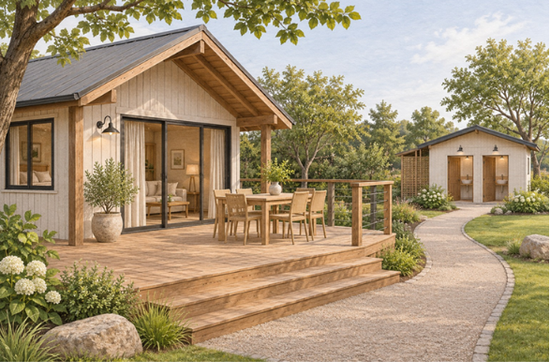
After a long journey, parents tend to notice practical things first. Can the bags be put down while the door is opened? Where will wet shoes go? Is there somewhere everyone can sit for a quick meal without moving half the outdoor furniture? Those details shape the start of a holiday more directly than a decorative feature in the listing photographs.
A family friendly holiday cottage outdoor space can be modest and still make a stay easier. Plan around arrival, meals and cleanup, with enough clear space for the family to settle in. The aim is to reduce the small tasks guests have to solve for themselves during a short break.
Design for the families you actually welcome
Think about the accommodation’s usual guests. Families with very young children use an outdoor area differently from those travelling with teenagers. Review the facilities and the property’s conditions before making broad claims about who the space suits.
Ask previous guests for specific feedback. Repeated comments about awkward storage or an unclear route can guide improvements more usefully than another decorative theme. A feature doesn’t have to be expensive to matter if it solves a problem that families encounter every day.
Include changes in level, boundaries and shared areas in the assessment. Obtain advice appropriate to the site where safety-related design decisions are involved. Give guests accurate information so they can judge the accommodation against their own needs rather than relying on general reassurance.
Make the first journey to the door straightforward
Follow the route from parking or the drop-off point while carrying typical luggage. Look for a narrow turn, a door that is hard to reach or a place where bags block everyone behind them. Consider a parent helping a child as well as an adult walking alone.
Keep the principal route clear of decorative objects and stored equipment. Provide somewhere appropriate to pause if the arrival process requires it. Clear photographs and concise directions can support the layout, especially where the correct entrance isn’t immediately visible.
Explain unavoidable access limitations before booking. Information about steps or a shared approach is useful when it is specific and accurate. Guests can plan around a known condition much more easily than a surprise discovered after a tiring journey.
Give the deck a practical purpose
A deck can extend the living area, provide an outdoor dining spot or make the entrance more usable. Decide which function matters most and allow room for the furniture and movement it involves. Keep the route from the doorway to the garden clear when seats are occupied.
NeoTimber’s decking ranges provide options to review for an appropriate cottage project. Work with a suitable installer on the complete arrangement, including support, drainage and the threshold detail. Compare physical samples in the property’s actual conditions before settling on the finish.
Follow the chosen manufacturer’s care guidance after installation. A surface doesn’t remove the need for cleaning, inspection or appropriate supervision. Consider the people maintaining the cottage as well: they need practical access to the areas where debris collects and a clear process for reporting anything that changes between stays.
Choose furniture for a real family meal
A dining set can fit on a deck and still leave too little room to use it comfortably. Measure with chairs pulled out and someone passing behind them. Check the door swing and the space needed for bags or a child’s belongings.
Suitable upright seating and a stable, useful table can support meals, drawing and board games. Avoid relying only on low lounge furniture if the area is meant to serve several purposes. Include supplied furniture in the property’s relevant inspection and maintenance routine.
Keep accessories restrained. Guests need room for their own cups and belongings, and staff need to clean the surfaces efficiently. A few carefully chosen items can give the space character without requiring a lengthy rearrangement at every changeover.
Find a home for wet and muddy belongings
Outdoor holidays bring coats, shoes and equipment back to the cottage. Without a storage plan, those items spread across chairs or gather at the doorway. A simple provision in the right place can make the outdoor area feel less crowded.
Choose storage appropriate to the location and its contents. Keep access and ventilation in mind, and avoid trapping damp belongings against the building. Explain what guests may use and where more valuable items should be kept.
Include storage in the changeover routine. Staff should know how to handle forgotten belongings and check that the space is ready for the next family. Keep cleaning supplies secured appropriately instead of mixing them with shared toys or other items children may use.
Explain shared facilities clearly
Some cottages sit within a site offering shared toilets, laundry or washing facilities. Families need to know what is available and how to reach it. Show the route clearly and consider the journey after dark, rather than assuming daylight directions are enough.
If shared washrooms are being upgraded, Tekflo’s hand dryers offer products to compare with the setting’s requirements. Consider sound, use levels and maintenance access, alongside current specifications and professional advice on layout and electrical installation. Alternative drying provision may also be useful for some users.
Describe the arrangement accurately in the listing. A family choosing a holiday needs to understand whether facilities are private or shared before arrival. Clear information allows them to make an informed choice and reduces the risk of a practical detail becoming a disappointing surprise.
About NeoTimber
NeoTimber offers composite and aluminium decking as part of its wider outdoor ranges. Its website includes samples, planning calculators and installation resources that can help accommodation owners prepare for a discussion about a proposed deck.
Use those resources around the actual cottage and its guest routine. Review the complete specification with the installer and retain the relevant care information for the maintenance team. Comparing the finish with the exterior and surrounding garden helps connect the visual choice with a practical plan for how guests will enter, sit and move through the outdoor area.
Leave room for a quieter moment
An outdoor space doesn’t need elaborate play equipment to be useful to a family. A comfortable seat in suitable shade can give a parent somewhere to read or an older child somewhere to draw. Position it within the property’s practical layout and appropriate supervision arrangements.
Assess gates, raised areas and protective edges through the care the specific site requires. Avoid describing a garden as childproof. If it is shared, partly enclosed or open to another area, say so clearly and keep the relevant details maintained.
Test a normal day before adding more features: arrival, breakfast outside, a wet return from an outing and the evening tidy. Where a bag blocks the door or a chair interrupts the route, adjust the arrangement. A family friendly cottage outdoor area earns its value when parents can spend more of the holiday enjoying the place and less time working out how to use it.Read more at https://momlifefamousparenting.com/.